LPG Safety Best Practices for Commercial Facilities
Liquefied Petroleum Gas (LPG) is widely used in commercial facilities such as restaurants, hotels, factories, and catering businesses due to its efficiency and reliability. However, proper safety measures are essential to prevent accidents, protect employees, and ensure uninterrupted operations.
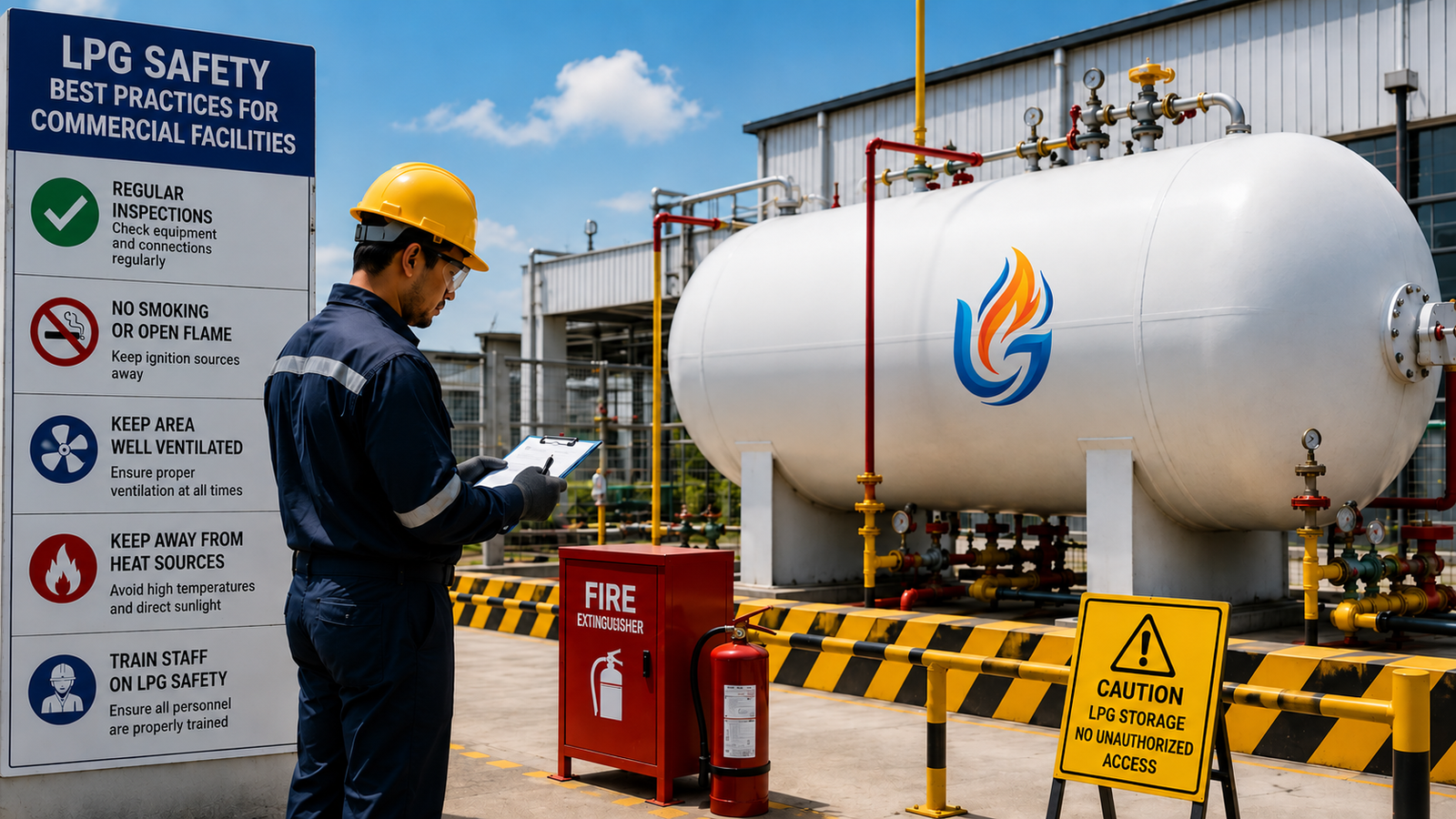
Regular inspection of LPG cylinders, pipelines, valves, and regulators is one of the most important safety practices. Commercial facilities should conduct routine checks to identify leaks, corrosion, or damaged components and replace faulty equipment immediately.
Proper storage of LPG cylinders is crucial for maintaining a safe environment. Cylinders should be stored in a well-ventilated area away from heat sources, open flames, electrical equipment, and direct sunlight. Storage areas should also be clearly marked and easily accessible for emergency response.
Employees who handle LPG systems should receive adequate training on safe operating procedures. Staff should understand how to use LPG equipment correctly, recognize potential hazards, and respond effectively in case of emergencies such as gas leaks or fires.
Leak detection should be performed regularly using approved methods. If a gas leak is suspected, personnel should immediately shut off the gas supply, avoid operating electrical switches, ventilate the area, and notify trained maintenance personnel for further inspection.
Commercial facilities should maintain fire safety equipment, including fire extinguishers and emergency shut-off systems, near LPG installations. Emergency exits should remain unobstructed, and evacuation procedures should be clearly communicated to all employees.
By following these LPG safety best practices, commercial facilities can reduce risks, comply with safety regulations, and create a safer working environment. A proactive approach to LPG safety helps protect people, property, and business operations from potential hazards.